
Contact Office Building
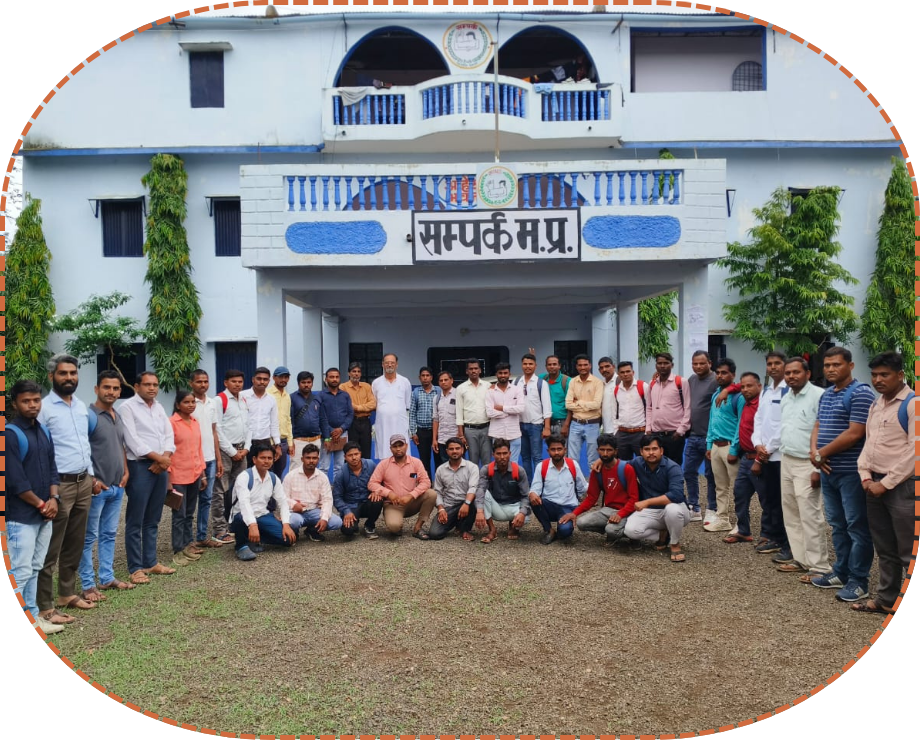
The campus has a three-story contact office building with offices, training halls, a computer lab, and staff accommodation.
Sampark Basic School
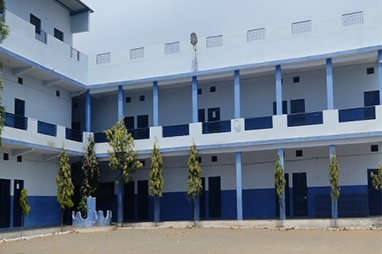
The Sampark Residential Basic School, based on Gandhi Ji's principles, serves grades 1-8, has classrooms, workshops, offices, accommodations, and a playground, providing all necessary facilities.
Sampark Science Center
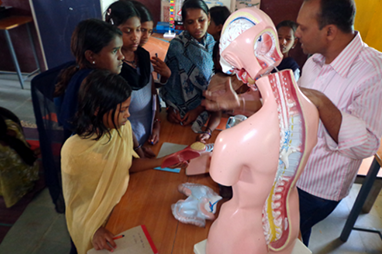
The science center features models related to the grades 1-10 science curriculum, covering biology, physics, human anatomy, puzzles, and mathematical concepts.
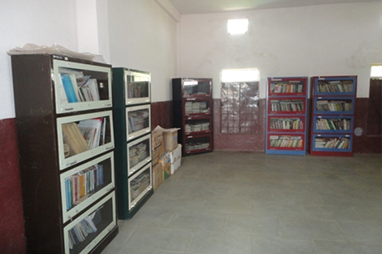
Library
The campus library has around 5000 books, including reference books for grades 1 to 10, children’s magazines, and books on education and social issues.
Kitchen
The Sampark campus includes a kitchen, dining hall for 400 children, flour mill, training hall, soil testing lab, recreation room, and water purifiers, with everyone cleaning their own utensils, inspired by Gandhi Ji's thoughts.
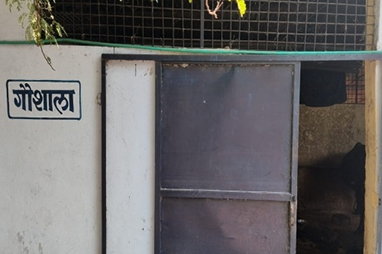
Cow Shed
The campus's advanced cow shed houses various cow breeds, providing them with green fodder, straw, and balanced diet; milk is supplied to the kitchen, urine used in the organic input center, and dung in the biogas plant.
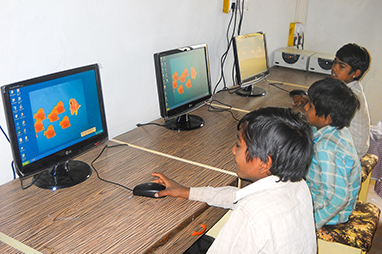
Computer Training Center
more smaller The campus's computer training center, with 12 laptops, teaches 54 students the basics of computer use throughout the year.
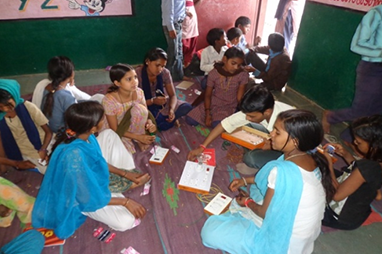
Industry Room
The school has two rooms for industry classes where students learn vocational activities like candle making, sewing, and tie-dyeing.
Campus Management
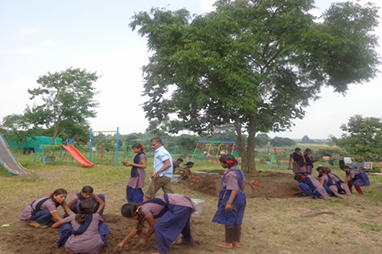
Inspired by Gandhi Ji, Sampark ensures everyone's participation in campus management through children's councils that assist with tasks like cleaning and cooking.
Training Center
A unique residential training center provides 3 to 7 days of training for young farmers on organic farming techniques and animal husbandry for self-reliance.
Alternative Energy Management
A significant portion of the organization's energy needs is met through alternative energy sources, including solar energy and biogas.
Organic Input Production Unit
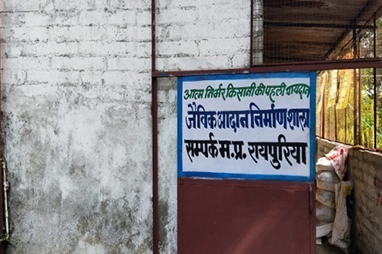
The campus has a unit producing various organic inputs like five-leaf extract, humic acid, Panchagavya, and compost to support organic farming and encourage other farmers to adopt these methods.
Nursery
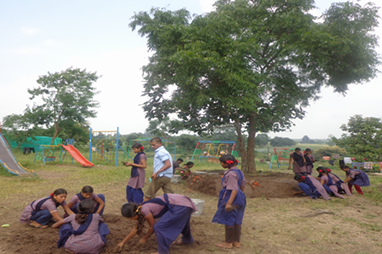
The Sampark campus nursery prepares seedlings of various fruit and medicinal plants, including papaya, jamun, tamarind, and bamboo, to promote natural crop cultivation.
Biogas Plant
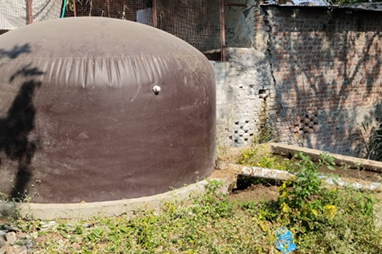
The kitchen also uses a 5-cubic-meter biogas plant that processes 125 kg of cow dung daily to generate enough biogas for cooking meals for 15-20 people.
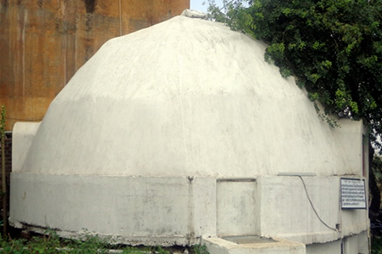
Dome
To the northwest of the Sampark campus, a multipurpose Dome, resembling rural houses in Rajasthan, remains cool in hot seasons and has a water tank with a 300,000-liter capacity.
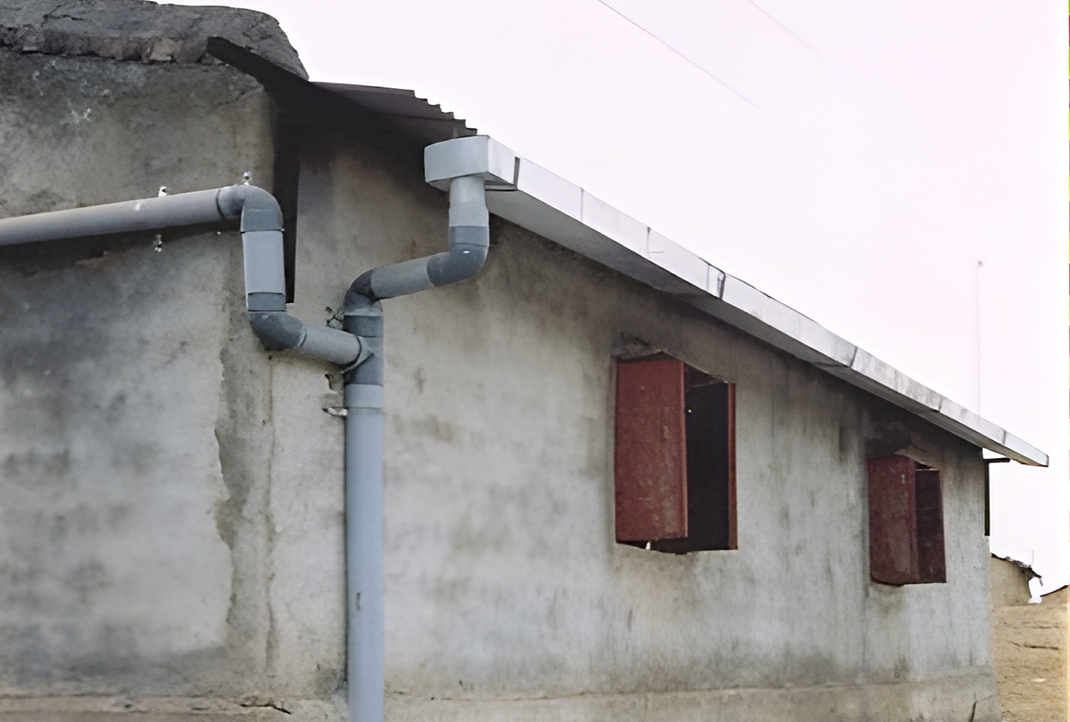
Rainwater Harvesting
Rainwater from the campus roofs is collected in a 300,000-liter underground tank for use as drinking water, demonstrating an effective rainwater conservation effort.
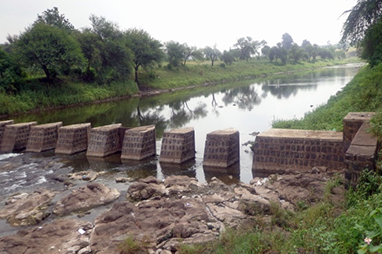
Stop Dam
Near the Sampark campus, a 95-meter wide stop dam with 14 gates on the Pumpavati river provides irrigation water for approximately 50 acres of land and ensures water availability for agriculture and livestock during summer.
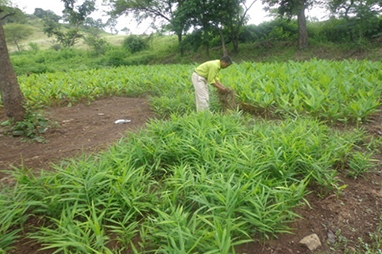
Organic Farming
Around 8 bighas of the Sampark campus are dedicated to organic farming, producing various crops with an average yield of 6 to 7 quintals per bigha, and includes a storage room for organic seeds.
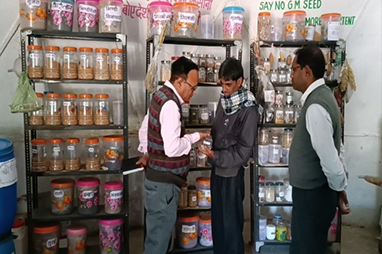
Community Seed Bank
The community seed bank in Jhabua district conserves and promotes indigenous seeds, preserving dozens of varieties and working with farmers to revive nearly extinct traditional seeds.